

Why We Believe in
Oil Wells that end well
Why Our Mission Is Oil Wells That End Well
At Renewell Energy, we believe the energy transition requires not just innovation, but imagination. Our mission, “Oil Wells That End Well,” reflects a vision for the future that repurposes the past. Across North America, millions of idle oil wells sit as stranded liabilities—leaking methane, burdening taxpayers, and posing long-term environmental risks. We see those wells not as problems, but as opportunities. Through the deployment of our gravity-based energy storage technology—what we call the Gravity Well—we’re transforming these idle wells into clean, scalable, and long-duration energy storage assets.
A Second Life for Stranded Wells
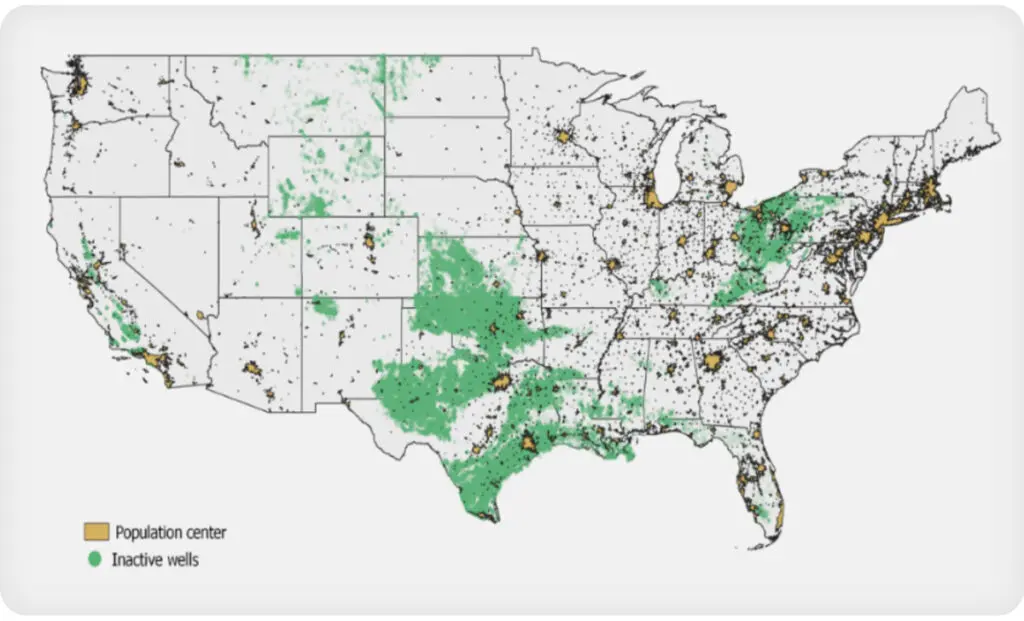
The scale of the problem is immense. Over 2.6 million oil wells are idle or abandoned in North America. Many are no longer producing but have not been plugged, allowing methane—a potent greenhouse gas—to leak into the atmosphere. The Environmental Protection Agency estimates these wells emit the equivalent of hundreds of millions of tons of CO₂ annually. The cost of properly cleaning and sealing them is projected to exceed $287 billion. While various policy efforts aim to address this legacy, there remains no clear commercial pathway to both clean up and capitalize on these stranded assets.
Renewell’s technology offers that pathway. By repurposing idle oil wells into vertical energy storage systems, we turn environmental and financial liabilities into revenue-generating clean energy infrastructure. Instead of spending to abandon these wells, we invest to convert them into storage—creating jobs, reducing emissions, and supporting the clean energy grid.
How Gravity Powers the Future
Our patented Gravity Well system is a new class of gravity energy battery. The concept is simple but powerful. When electricity from renewable sources is abundant and inexpensive—such as during peak solar generation—our system uses that electricity to lift a heavy mass suspended within a sealed oil well. When demand increases or renewable production drops, the mass is allowed to descend. This downward movement turns a regenerative winch, producing electricity from gravity. It’s an elegant mechanical solution that enables long-duration energy storage without the need for rare earth minerals or chemical degradation.
Unlike traditional lithium-ion batteries, which degrade over time and pose environmental and sourcing concerns, gravity-based energy storage systems like ours offer long life, low maintenance, and highly predictable performance. A single Gravity Well unit can store between 40 and 500 kilowatt-hours of energy, depending on well depth and payload. With more than 1.8 million wells suitable for conversion, this represents over 130 gigawatt-hours of potential storage—enough to provide roughly 5% of the storage capacity needed for a fully renewable U.S. grid.
Making the Economics Work
Our system isn’t just technically sound—it’s economically viable. The Gravity Well is competitive with other long-duration storage technologies, including pumped hydro and flow batteries. But unlike those systems, our solution leverages existing subsurface infrastructure, avoiding costly land use, permitting, and excavation.
This economic edge opens up a new category of storage deployment: distributed, grid-connected systems located near load centers and transmission. It also creates a compelling opportunity for oil and gas asset owners. Instead of writing off the cost of well plugging and remediation, operators can partner with Renewell to convert idle wells into revenue-generating energy infrastructure. The result is a commercially scalable solution that also delivers environmental and regulatory compliance.
Momentum On Our Mission For Oil Wells That End Well
Renewell has attracted significant attention from both industry analysts and mainstream media, underscoring the strength of our technology and strategic position in the clean energy space.
A recent Bloomberg feature titled “Idle Oil Wells’ Next Act? Becoming Batteries for Renewable Energy” spotlights our Gravity Well system and its potential to turn idle wells into long-duration energy storage, supporting the stability and scalability of renewable power.
The Cool Down explored how our work aligns with New Mexico’s House Bill 361, which encourages the use of orphaned wells for geothermal and gravity-based energy storage. The bill represents a legislative framework that could accelerate the adoption of solutions like ours.
Planetizen featured Renewell in its article “Innovation in Energy: Repurposing Depleted Wells for a Sustainable Future,” highlighting how gravity-based energy storage can serve both environmental and grid-resilience goals.
We were also named one of the “20 Oil & Gas Startups to Watch” in 2025 by StartUs Insights, recognizing our unique approach to transforming fossil fuel infrastructure into clean energy assets.
Additional coverage from Yahoo News and a second article from The Cool Down emphasized the growing interest in gravity-based energy storage technologies and how policy and innovation are beginning to intersect in this space.
Looking Ahead
The challenge of transitioning our energy systems is vast, but so is the opportunity. At Renewell, we believe the infrastructure of the past can power the future. Our Gravity Well systems provide a path to generate electricity from gravity while remediating oilfield legacies and building a cleaner grid.
“Oil Wells That End Well” is more than a tagline—it’s a philosophy. It represents our belief that the energy industry doesn’t have to leave behind scars. It can leave behind solutions. Through gravity-based energy storage, we’re not just reimagining the role of idle oil wells—we’re redefining what it means to end well.
A Closer Look.
Renewell’s “Gravity Well” technology utilizes a mechatronic energy conversion system to convert idle oil and gas wells into the lowest cost, greenest energy storage in existence. A Gravity Well charges and discharges by lifting and lowering a long cylindrical weight, which consists of used oilfield tubing or casing and high-density filling. It is suspended by wire rope in an idle well that is sealed with a cement plug before installation. An ultra-high-efficiency motor-generator converts the system’s potential energy to electrical energy for use on the grid.
Idle oil and gas wells are an ideal host for gravity energy storage due to their depth, expensive plug and abandonment (P&A), pre-existing electrical infrastructure, and current methane emissions. US wells average ~5,200ft of depth, greatly increasing (>10x vs. competitors) the storage potential of each kilogram of suspended weight. Combining this high-value storage with the high-cost, legally required P&A process offers the lowest cost energy storage available (LCOS = $63/MWh). Up to 40% of idle wells have been found to leak methane. Sealing the well during installation stops these emissions, making a Gravity Well the only energy storage technology with directly net-negative lifecycle GHG emissions.
Offering 40 to 500 kWh per well in over 1,000,000 viable US wells, this technology maximizes benefits from economies of scale.